Onlay vs. Crown: When You Don’t Need a Full Crown
An onlay covers only the damaged part of a tooth, while a crown covers all of it. How they compare and when a biomimetic dentist chooses one over the other.

By Dr. Stephanie P. Lee, DDS · 4 min read
In this article
If you’ve been told you need a crown, you may not need a full one. Many teeth with a large cavity, a crack or a failing old filling can be restored with an onlay, which covers only the damaged part of the tooth and leaves the healthy part alone.
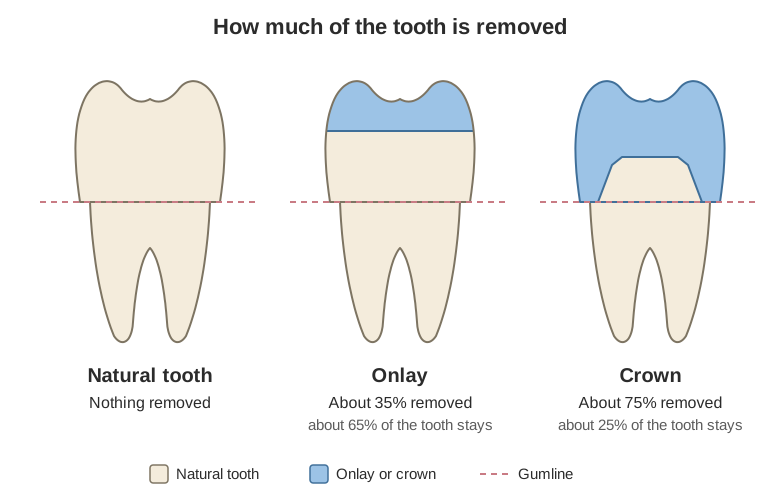
The short answer: a crown covers the whole tooth, so the dentist has to shave the tooth down on every side to make room for it. An onlay replaces only the part that is damaged, usually one or more of the cusps (the raised points on a back tooth). When enough healthy tooth is left, an onlay saves more of your natural tooth and can do the same job.
What Is an Onlay?
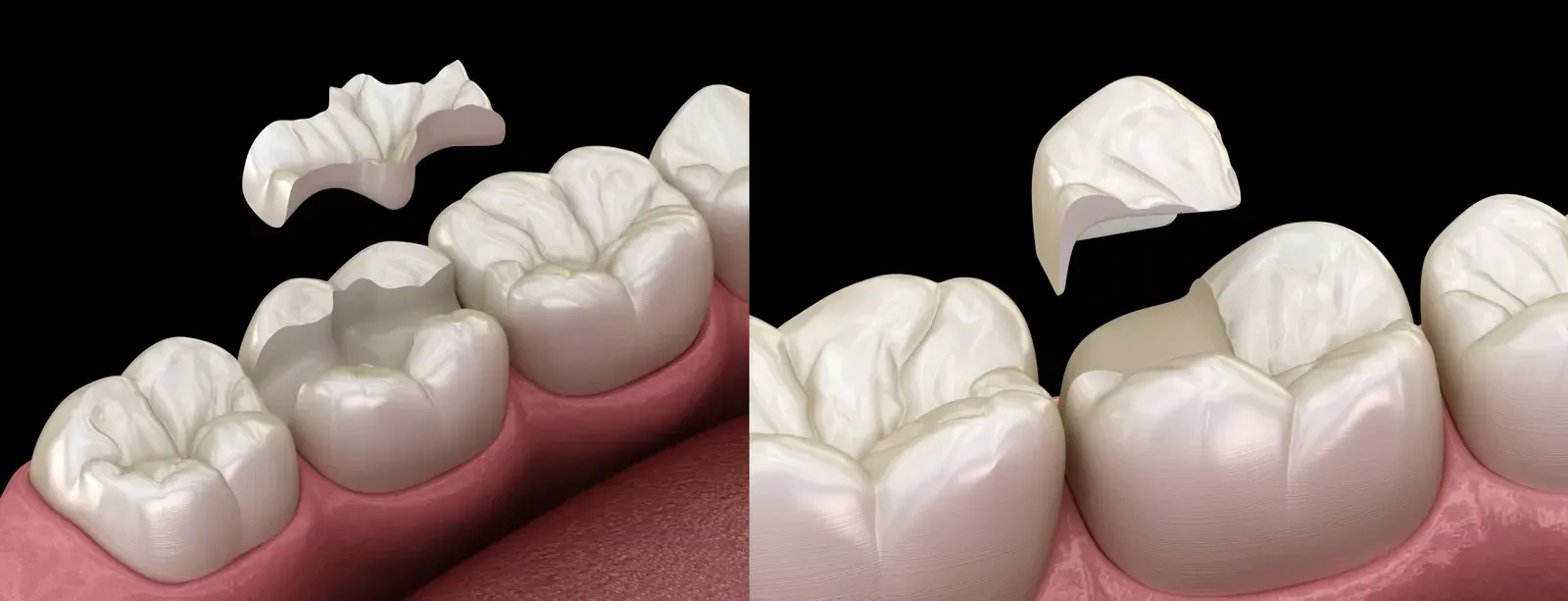
An onlay is a custom piece of ceramic that is made to fit the damaged area exactly and then bonded to the tooth. It sits on top of the chewing surface and over one or more cusps, which is what makes it different from an inlay (which fits inside the grooves, between the cusps) and from a filling (which is shaped directly in the mouth).
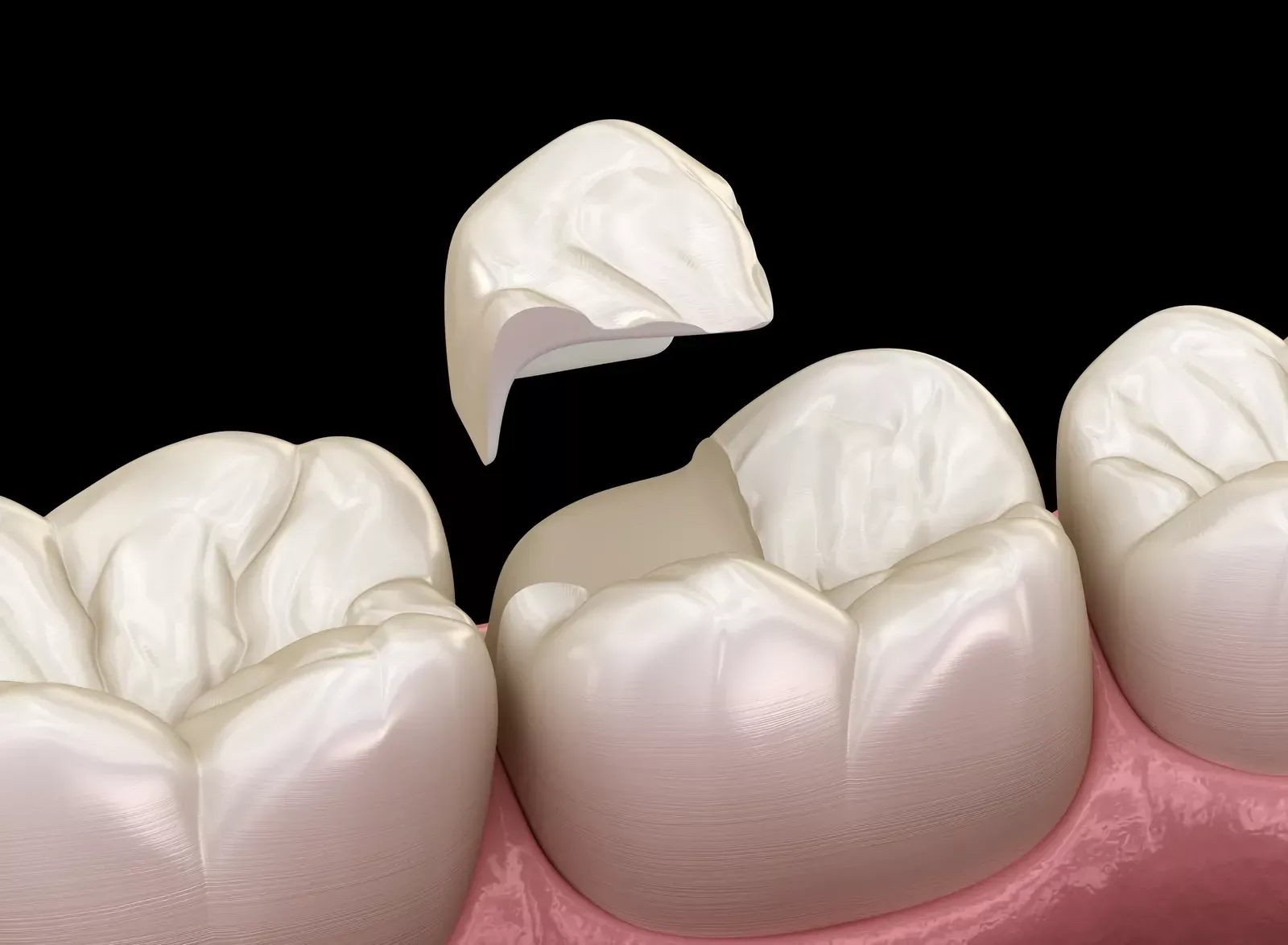
Because the onlay is bonded, it holds the remaining tooth together and strengthens it, much the way natural enamel does.
What Is a Crown?
A crown is a cap that covers the entire visible part of the tooth, down to the gumline. To fit one, the tooth is reduced on all sides, including the healthy sides. Crowns are strong and have been used for a very long time, and sometimes they are the right choice. The trade-off is how much healthy tooth has to be removed. Studies that measured this found a full crown removes roughly two thirds or more of the visible tooth, while partial coverage such as an onlay removes much less.
Onlay vs. Crown at a Glance
| Onlay | Crown | |
|---|---|---|
| Covers | Only the damaged part, including one or more cusps | The whole visible tooth |
| Healthy tooth removed | Much less | Reduced on every side |
| How it’s held on | Bonded to the tooth | Usually cemented or bonded over the tooth |
| Edge near the gum | Usually above the gumline, easier to keep clean | Often at or below the gumline |
| Future options | A crown is still possible later if ever needed | Once a tooth is cut for a crown, it can’t go back |
| Appointments at Science of Smiles | Usually one visit (CEREC) | Often one visit (CEREC); some crowns are made by a dental lab |
When an Onlay Is Usually the Better Choice
- A large cavity that is too big for a filling but hasn’t destroyed most of the tooth
- An old silver filling that is breaking down or has cracks around it
- One or two broken or cracked cusps, with the rest of the tooth healthy
- Wear or damage from grinding, when the tooth is otherwise sound
When a Crown May Still Be Needed
- Most of the tooth is already gone, so there isn’t enough healthy structure to bond an onlay to
- A crack runs deep, toward or below the gumline
- An existing crown needs to be replaced
- A dental implant needs a tooth on top
After a root canal, back teeth have traditionally been crowned. Depending on how much tooth is left, a bonded onlay can sometimes protect the tooth instead. Your dentist can tell you which applies after an exam and X-rays.
Why Science of Smiles Starts With the Least Invasive Option
Dr. Stephanie P. Lee practices biomimetic dentistry, which means restoring teeth so they behave like natural teeth while keeping as much healthy tooth as possible. Every bit of enamel that stays is enamel that never needs to be replaced. That’s why we look at whether an onlay can do the job before recommending a full crown. You can read more about this approach in why choose a biomimetic dentist.
Most onlays at our office are made in a single visit. With the CEREC 3D system, Dr. Lee scans the tooth, designs the onlay on screen and mills it from high-quality ceramic in the office, so there are no goopy impressions, no temporary and no second appointment. Many crowns can be made the same day too. Some crowns are made by a professional dental lab instead, depending on the material the tooth needs and where the edge of the crown sits, and those take a second visit. A tooth with particular cosmetic needs, such as a front tooth that needs custom shading and characterization to match the teeth around it, may also be sent to a professional lab.
FAQs
Is an onlay as strong as a crown?
For the right tooth, a bonded ceramic onlay is very strong, because it is attached to the tooth and supports what is left of it. When a tooth has too little healthy structure left, a crown is the stronger option.
How long does an onlay last?
Well-made bonded onlays often last many years, and they can last as long as crowns. How long yours lasts depends on your bite, grinding, and how well you care for your teeth. A night guard helps if you grind.
Does insurance cover onlays?
Many dental plans cover onlays in the same category as crowns, but coverage varies by plan. Our team can check your benefits before treatment.
Can I get an onlay instead of the crown another dentist recommended?
Sometimes. Bring your X-rays if you have them, and Dr. Lee will look at how much healthy tooth is left and give you her honest opinion.
Ask Whether You Need a Full Crown
If you’ve been told you need a crown, or you have a large old filling or a cracked tooth, call us at 626-795-0221 or book online. We’ll show you what we see and explain your options.
More from the Smile Blog
- Oral Appliance Therapy for Sleep Apnea: A CPAP Alternative From Your DentistA custom oral appliance holds your lower jaw slightly forward to keep your airway open while you sleep. Who it works for, how you get one and how it compares with CPAP.
- Does Teeth Whitening Damage Your Enamel? Understanding the Risks and BenefitsSee teeth whitening before and after results and what to expect. Explore before and after pictures of teeth whitening to compare professional results.
- Professional Teeth Whitening Before and After: What Results Can You Expect?See teeth whitening before and after results and what to expect. Explore before and after pictures of teeth whitening to compare professional results.