Curodont Repair Before and After: What to Expect From the Treatment

Early tooth decay does not always have to lead to drilling, fillings, or removal of natural tooth structure. When enamel damage is caught early, a conservative treatment like Curodont Repair Fluoride Plus may help strengthen weakened areas before they become larger cavities.
If you are researching Curodont repair before and after results, you are likely wondering what the treatment looks like, how soon changes may appear, and whether it can help with the chalky white spots or early enamel lesions you see on your teeth. This patient guide explains what to expect before treatment, after treatment, and during the weeks that follow.
What Is Curodont Repair Fluoride Plus?
Curodont Repair Fluoride Plus is a professional, in-office treatment designed to support enamel repair in areas of early tooth decay. Instead of drilling into the tooth, the treatment is applied directly to the affected enamel surface.
The goal is to help minerals move back into the weakened enamel. Curodont uses a biomimetic approach, meaning it works with the natural structure and healing potential of the tooth rather than replacing it right away with artificial material. The treatment is often recommended when a lesion is still in its early, non-cavitated stage, which means the enamel has begun to lose minerals but has not yet broken down into a hole.
For many patients, the biggest benefit is that Curodont Repair Fluoride Plus may help preserve healthy tooth structure while reducing the risk that early decay will progress.

Curodont Repair Before and After: What Changes Can You Expect?
A Curodont repair before and after comparison is usually more subtle than the dramatic change you might see with cosmetic bonding, veneers, or whitening. That is because Curodont is not a cover-up treatment. It is designed to help repair early enamel damage from within the tooth structure.
Before treatment, the affected area may appear as:
A chalky white spot on the enamel
A dull or opaque patch
An early cavity detected on an exam or X-ray
A roughened enamel surface
A white spot after orthodontic treatment
A weakened area that has not yet become a full cavity
After treatment, the goal is to help the lesion become more stable, stronger, and less likely to progress. Depending on the location, severity, and patient’s home-care routine, the area may gradually appear smoother, less chalky, or less noticeable over time.
It is important to understand that results vary. Some patients notice visible improvement in white spot lesions, while others may see the biggest benefit clinically, meaning the tooth becomes healthier and more resistant even if the cosmetic change is modest.
Curodont Repair Fluoride Plus Before and After: A Patient-Friendly Timeline
When patients ask about Curodont repair fluoride plus before and after, they often want to know how quickly they will see a difference. The treatment itself is typically quick, but enamel remineralization is a gradual process.
Before Treatment
Before Curodont is recommended, your dentist will evaluate the tooth to confirm that the area is still appropriate for non-invasive treatment. This may include a visual exam, cavity-detection technology, X-rays, or other diagnostic tools.
Curodont is generally considered when the enamel is weakened but still intact. If the tooth already has a larger cavity, broken enamel, infection, or deeper decay, another type of restorative treatment may be needed.
During Treatment
Curodont Repair Fluoride Plus is applied directly to the early lesion. The process is typically comfortable and does not require drilling or numbing in most cases. Your dental team will isolate and prepare the tooth surface, apply the treatment, and give you aftercare instructions to help support the remineralization process.
Immediately After Treatment
Right after the appointment, you may not see a major visual difference. This is normal. Curodont is not meant to instantly mask the tooth. Instead, it starts the process of guided enamel repair.
Your dentist may recommend avoiding food or drink for a short period after treatment, depending on your specific case and the product protocol used.
Weeks After Treatment
Over the following weeks, minerals from saliva can help strengthen the treated area. This is when many patients begin to understand the value of a Curodont repair before and after comparison. The “after” result is not just about appearance. It is about helping the tooth become healthier, stronger, and better protected.
Your dentist may monitor the area at follow-up visits to determine whether the lesion has stabilized, improved, or needs additional care.
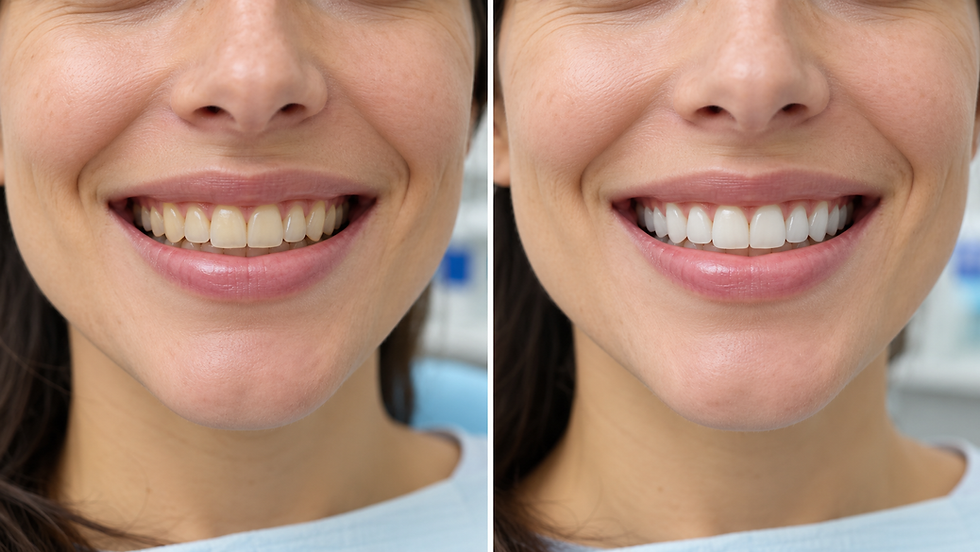
Before and After Photos: Curodont Repair Results
A dedicated photo comparison can help patients understand what Curodont Repair Fluoride Plus may achieve when early enamel damage is caught at the right time.


What Can Curodont Treat?
Curodont is not for every cavity, but it can be a valuable option for early enamel problems. It may be recommended for:
Early-stage tooth decay
Non-cavitated enamel lesions
Incipient caries
White spot lesions
Early enamel demineralization
Some early lesions near orthodontic brackets or after braces
Early decay between teeth, when diagnosed before cavitation
Areas where the goal is to preserve natural tooth structure
Curodont is not typically used for deep cavities, broken enamel, infected teeth, or decay that has already created a hole in the tooth. In those cases, a filling, inlay, onlay, crown, or another restorative treatment may be more appropriate.
Why Early Detection Matters
The best Curodont repair before and after results happen when enamel damage is found early. Once decay breaks through the enamel surface and forms a cavity, the tooth usually cannot rebuild that lost structure on its own.
That is why regular dental exams are so important. Early lesions can be difficult to see at home, especially when they form between teeth or near the gumline. With the right diagnostic tools, your dentist can identify small areas of mineral loss before they become painful or more expensive to treat.
Curodont gives patients a chance to act earlier, when the tooth can still be treated more conservatively.
How Curodont Supports a Biomimetic Dental Approach
Biomimetic dentistry focuses on preserving as much natural tooth structure as possible. Instead of removing more tooth than necessary, a biomimetic approach looks for ways to strengthen, protect, and restore teeth in a way that closely respects their natural design.
Curodont Repair Fluoride Plus fits this philosophy because it is designed for early intervention. By supporting guided enamel remineralization, it may help delay or prevent the need for more invasive dental work. For patients who want modern, conservative care, this can be an important advantage.
How to Support Your Curodont Results at Home
Your at-home habits play an important role in your Curodont repair fluoride plus before and after outcome. After treatment, your dentist may recommend steps such as:
Brushing twice daily with fluoride toothpaste
Flossing once daily
Limiting frequent snacking
Reducing sugary and acidic drinks
Drinking plenty of water
Keeping up with professional cleanings
Wearing retainers or orthodontic appliances as instructed
Returning for follow-up exams so the treated area can be monitored
Curodont can support enamel repair, but long-term success depends on controlling the factors that caused the early decay in the first place.
Is Curodont Repair Fluoride Plus Right for You?
Curodont may be a good option if your dentist has found early decay and the tooth surface is still intact. It may also be helpful if you have white spot lesions that you want evaluated before choosing a more cosmetic treatment.
However, the only way to know whether you are a candidate is to schedule an exam. Your dentist will look at the depth, location, and activity of the lesion before recommending Curodont or another treatment.
Advanced, Biomimetic Dental Care at Science of Smiles in Pasadena
At Science of Smiles in Pasadena, we believe dental care should be precise, conservative, and focused on protecting as much natural tooth structure as possible. Our biomimetic approach allows us to treat dental concerns in a way that works with the tooth’s natural strength, function, and design rather than relying on overly invasive care whenever a more conservative option is available.
For patients with early enamel damage, treatments like Curodont Repair Fluoride Plus reflect this philosophy. By supporting the tooth’s natural remineralization process, Curodont can help address early-stage decay before it progresses into a larger cavity that may require more extensive treatment.
Our team uses advanced dental technology to carefully evaluate your teeth, detect potential concerns early, and create personalized treatment recommendations based on your needs.

Take the Next Step Toward Stronger, Healthier Enamel. Contact Science of Smiles Today to Schedule a Consultation
A Curodont repair before and after comparison is about more than appearance. While some white spot lesions may look smoother or less noticeable after treatment, the deeper goal is to help strengthen weakened enamel and stop early decay from becoming a larger cavity.
Curodont Repair Fluoride Plus is most effective when enamel damage is caught early, before the tooth surface breaks down. For the right patient, it can be a comfortable, conservative, and tooth-preserving treatment option.
If you are interested in seeing whether Curodont is right for your smile, contact Science of Smiles today at (626)795-0221 or book an appointment directly online. Our team can evaluate your teeth, explain your options, and help you take the next step toward healthier, stronger enamel.
FAQs
How long does it take to see results from Curodont repair fluoride plus?
Some patients may notice visual changes within a few weeks, while others may see more gradual improvement over time. The most important result is often clinical, meaning the treated enamel becomes more stable and less likely to progress into a cavity.
Who is a good candidate for Curodont Repair Fluoride Plus?
A good candidate is someone with early enamel damage, non-cavitated decay, or white spot lesions that have not progressed into a full cavity. A dental exam is needed to confirm whether the tooth is still suitable for this conservative treatment.
How many Curodont treatments will I need?
Some patients may need only one application, while others may benefit from additional monitoring or treatment depending on the lesion. Your dentist will recommend a plan based on the tooth’s condition and how it responds over time.
Where can I get Curodont repair in Pasadena?
Patients interested in Curodont repair in Pasadena can schedule an evaluation at Science of Smiles. Our biomimetic approach focuses on preserving natural tooth structure and treating early dental concerns as conservatively as possible.

Comments