ClearCorrect vs Invisalign: Comparing Aligner Options to Help You Decide Which is Best for You

Clear aligners have become a popular alternative to traditional braces for patients who want a more discreet and convenient way to straighten their teeth. Two of the most established options are ClearCorrect and Invisalign, both of which use a customized series of removable aligners to gradually reposition the teeth.
Although the systems work according to the same basic principle, they differ in their aligner materials, trimline designs, treatment-planning technologies, package structures, provider networks, and overall patient experience. These differences can influence comfort, treatment predictability, cost, and whether one system is better suited to a particular orthodontic concern.
This ClearCorrect vs Invisalign guide explores the most important similarities and differences so that you can have a more informed conversation with your dentist. Ultimately, the best aligner system is not determined by brand name alone. Your diagnosis, treatment plan, oral health, lifestyle, and provider’s experience are all critical to achieving a healthy and attractive result.
What Is ClearCorrect?
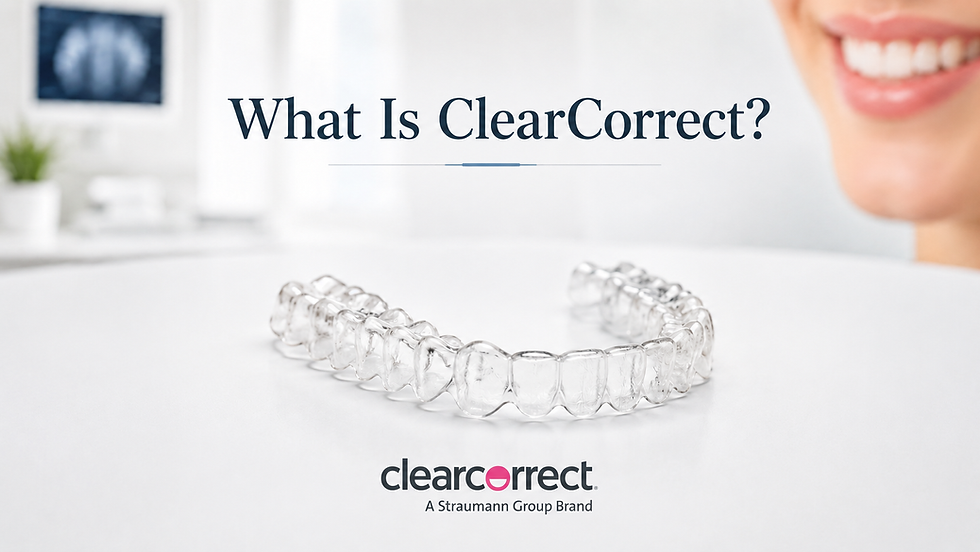
ClearCorrect is a dentist-supervised clear aligner system owned by the Straumann Group. It uses a series of custom trays to gradually guide the teeth into their planned positions.
ClearCorrect aligners are manufactured with ClearQuartz, a three-layer material that combines two resilient outer polymer layers with an elastomeric inner layer. The manufacturer designed this material to retain its shape and deliver consistent force throughout each aligner’s prescribed wear period.
One of ClearCorrect’s distinguishing characteristics is its trimline. Its Performance Trimline is high, flat, and unscalloped, extending slightly above the gumline. This design is intended to improve force transmission and give the treating dentist additional control over certain tooth movements.
ClearCorrect also gives providers access to customizable features, including:
Engagers, which function similarly to attachments
Cutouts for buttons and orthodontic elastics
Anterior and posterior bite ramps
Different trimline heights
Treatment-planning preferences
ClearPilot digital treatment-planning software
ClearCorrect offers several case packages, including FLEX, MINI, ONE, TWO, UNLIMITED 3, and UNLIMITED 5. Package availability may vary by region, and each option provides different allowances for aligners, revisions, retainers, or treatment duration.
What Is Invisalign?
Invisalign is one of the most established and widely recognized clear aligner systems. Treatment is planned and supervised by a participating dentist or orthodontist and uses digitally designed aligners created specifically for the patient’s teeth.

The Invisalign system combines three primary proprietary technologies:
SmartTrack material: A flexible aligner material designed to fit closely over the teeth and deliver controlled force.
SmartForce attachments: Small, tooth-colored shapes bonded to selected teeth to help the aligners perform more precise movements.
SmartStage technology: Digital planning software that determines when and in what sequence individual teeth should move.
These technologies work together to help providers plan and manage a broad range of orthodontic movements.
Invisalign aligners generally have a scalloped edge designed to follow the contours of the gumline. Depending on the case, patients may also receive attachments, precision cuts, elastics, bite ramps, or other features intended to increase control.
Invisalign can be used for many mild, moderate, and potentially more complex alignment concerns. The Invisalign Comprehensive package, for example, is designed to support treatment of a broad range of malocclusions and may include additional aligner sets when refinements are necessary.
ClearCorrect vs Invisalign Comparison Table
Comparison category | ClearCorrect | Invisalign |
Treatment type | Dentist-supervised removable clear aligners | Dentist- or orthodontist-supervised removable clear aligners |
Aligner material | ClearQuartz three-layer material | Proprietary SmartTrack material |
Trimline | High, flat, and generally extends above the gumline | Scalloped to follow the gumline |
Tooth-colored features | Engagers | SmartForce attachments |
Digital treatment planning | ClearPilot platform | SmartStage treatment-planning technology |
Supporting features | Cutouts, elastics, engagers, and bite ramps | Attachments, precision cuts, elastics, and bite ramps |
Case options | FLEX, MINI, ONE, TWO, UNLIMITED 3, and UNLIMITED 5, subject to regional availability | Multiple treatment options based on age and case complexity |
Case complexity | Can address mild through more involved cases when properly planned | Can address mild through complex cases when properly planned |
Brand history and recognition | Established system supported by Straumann | Highly established and broadly recognized clear aligner brand |
Provider availability | Depends on whether a dentist offers ClearCorrect | Broad provider network, but availability still depends on the practice |
Cost | Varies by package, complexity, provider, and included services | Varies by complexity, provider, aligner count, and included services |
Best choice for | Patients whose provider recommends ClearCorrect’s material, trimline, or package structure | Patients seeking a widely used system with extensive digital planning tools and provider familiarity |
Invisalign vs ClearCorrect: What Are the Key Differences?
Although both systems work according to the same basic orthodontic principle, several differences may affect the patient experience and the provider’s treatment approach.
Aligner Materials
ClearCorrect uses ClearQuartz, while Invisalign uses SmartTrack. Both are multilayer or specialized materials designed to provide flexibility, durability, and controlled orthodontic force.
Patients may notice subtle differences in how each material feels, flexes, or fits over the teeth. However, comfort cannot be determined by material alone. The treatment plan, attachment placement, tray fit, tooth movement, and individual sensitivity all affect how aligners feel.
Mild pressure or tenderness is common when beginning treatment or switching to a new tray. This usually indicates that the aligner is applying force to move the teeth.
Trimline Design
Trimline design is one of the clearest physical differences in an Invisalign vs ClearCorrect comparison.
ClearCorrect’s high, flat trimline extends above the gingival margin. The design is intended to help transmit force and support root control. Invisalign trays are generally trimmed in a scalloped pattern that follows the gumline more closely.
A patient may prefer the feel of one design over another, but the trimline should not be evaluated in isolation. A properly planned and well-fitting aligner is more important than whether its edge is straight or scalloped.
Attachments and Engagers
Both systems may require small tooth-colored shapes to be bonded to the teeth.
Invisalign calls these features SmartForce attachments. They give the aligner an additional surface to push against, helping create movements that may be difficult to accomplish with a smooth tray alone.
ClearCorrect generally calls its comparable features engagers. ClearCorrect gives providers options for selecting different sizes, shapes, and orientations based on the planned movement.
Attachments and engagers can make aligners slightly more noticeable, especially when placed on the front teeth. They may also create temporary difficulty when inserting or removing trays. Nevertheless, these features can be essential to achieving accurate results.
Digital Treatment Planning
Both systems rely heavily on digital treatment planning.
ClearCorrect providers use ClearPilot to examine the proposed tooth movements and customize treatment preferences. Invisalign providers use the Invisalign digital platform and SmartStage technology to sequence individual movements.
The software helps visualize the intended treatment, but it does not replace clinical judgment. The dentist must evaluate the bite, roots, gums, bone support, restorations, and overall oral health before approving or modifying the plan.
Treatment Package Structure
ClearCorrect places considerable emphasis on package flexibility. Its case options are structured around the anticipated extent and duration of treatment. Certain packages include defined numbers of aligners or revisions, while unlimited plans allow treatment and revisions within a specified time window.
Invisalign also provides treatment options for cases of different complexity, including shorter plans and comprehensive treatment. The exact package recommended depends on the provider’s assessment and anticipated need for additional aligners.
Patients should ask what their quoted fee includes, regardless of brand. A lower initial price may not represent a lower total cost when retainers, replacement trays, refinements, records, or follow-up visits are billed separately.
Can ClearCorrect and Invisalign Treat the Same Dental Problems?
There is substantial overlap between what ClearCorrect and Invisalign may be able to treat. Either system could potentially be recommended for:
Minor crowding
Spacing between teeth
Relapse after previous orthodontic treatment
Crooked front teeth
Overbites
Underbites
Crossbites
Open bites
More involved bite or alignment concerns
ClearCorrect offers engagers, bite ramps, cutouts, and elastics that allow providers to plan more complicated movements. Invisalign similarly uses attachments, precision features, elastics, and digitally sequenced movements.
That does not mean both systems will be equally appropriate for every individual. Treatment suitability depends on factors such as:
The type and severity of the malocclusion
The amount of tooth rotation required
The condition of the gums and supporting bone
Existing crowns, bridges, implants, or veneers
The need for extractions or significant bite correction
The patient’s age and stage of dental development
The patient’s ability to follow wear instructions
The provider’s experience can also influence which system is recommended. A dentist who has extensive experience planning Invisalign cases, for example, may be able to use the system more effectively than an unfamiliar alternative.
ClearCorrect vs Invisalign: Comfort and Appearance
Both products are designed to be discreet, but neither is completely invisible. The trays may reflect light, and attachments or engagers can make treatment more noticeable at close range.
The aligner edge may also affect comfort. Some patients may prefer Invisalign’s scalloped trimline, while others may adapt easily to ClearCorrect’s higher, flatter edge. Gum sensitivity, tray fit, and individual anatomy can influence the experience.

Temporary pressure is normal with either option, particularly during the first few days of a new aligner. Rough areas should be reported to the dental office rather than aggressively cut or modified at home.
From an appearance standpoint, both systems offer significant advantages for patients who want to avoid conventional metal brackets. The aligners can be removed for meals, oral hygiene, important photographs, or brief special occasions, although frequent or prolonged removal can interfere with treatment progress.
Daily Care and Patient Responsibilities
The lifestyle requirements for ClearCorrect and Invisalign are very similar. Regardless of the brand, patients must be willing to wear and maintain their trays consistently.
Typical responsibilities include:
Wearing aligners according to the provider’s instructions
Removing them before eating
Drinking only plain water while trays are in place
Brushing and flossing before reinserting the aligners
Cleaning the trays with approved methods
Storing removed aligners in their case
Attending scheduled progress appointments
Contacting the dental office if an aligner is lost or damaged
Wearing retainers after active treatment
Food particles and sugary or acidic liquids can become trapped beneath aligners, increasing the risk of decay, staining, and gum irritation. The American Association of Orthodontists recommends removing aligners for beverages other than water and cleaning the teeth before putting the trays back in.
Which Is Better: ClearCorrect or Invisalign?
There is no single winner for every patient. Either system may produce excellent results when the case is properly selected, planned, and monitored.

ClearCorrect may be worth considering when:
Your provider has substantial experience with the system
Its package structure fits the anticipated treatment
The provider prefers its high trimline for the movements involved
The available treatment estimate fits your budget
Its customization features match your clinical needs
Invisalign may be the stronger option when:
Your provider has extensive Invisalign experience
You want a highly established clear aligner system
Your case may benefit from Invisalign’s proprietary attachments and staging technology
You prefer a scalloped trimline
You want access to a broad and familiar treatment ecosystem
The best choice is not necessarily the tray with the most recognizable name or the lowest advertised price. It is the treatment system your provider can use effectively to address your specific tooth positions, bite, oral health, and long-term goals.
Advanced Invisalign Treatment at Science of Smiles in Pasadena
At Science of Smiles, Dr. Stephanie P. Lee, DDS, combines Invisalign treatment with a biomimetic approach focused on preserving and protecting the natural structure of your teeth. Biomimetic dentistry aims to restore function, improve strength, and support long-term oral health while minimizing unnecessary alteration of healthy tooth structure.
This philosophy also guides our approach to Invisalign. By improving tooth alignment and bite relationships, Invisalign can make it easier to clean between teeth, reduce areas where plaque may collect, and support a healthier, more balanced smile. Our team uses advanced digital scanning and diagnostic technology to evaluate your teeth, bite, and smile goals before creating a personalized Invisalign treatment plan.
Science of Smiles welcomes patients from Pasadena, South Pasadena, Altadena, San Marino, La Cañada, and surrounding communities. Whether you are concerned about crowding, spacing, shifting after previous orthodontic treatment, or bite alignment, our team can help determine whether Invisalign is a suitable option for preserving and enhancing your natural smile.

Start Your Invisalign Journey With Science of Smiles
When comparing ClearCorrect vs Invisalign, remember that both systems can offer a discreet and convenient way to straighten teeth. Their materials, trimlines, digital platforms, and package structures differ, but your final result will depend heavily on accurate diagnosis, personalized planning, consistent aligner wear, and professional monitoring.
At Science of Smiles, we use advanced dental technology and a patient-centered approach to create Invisalign plans designed around your smile, bite, oral health, and long-term comfort. Contact Science of Smiles at (626) 795-0221 or book an appointment online to schedule your Invisalign consultation with our Pasadena dental team.
FAQs
Is Invisalign better than ClearCorrect?
Invisalign is often preferred because of its established track record, advanced treatment-planning technology, and broad range of treatment features. However, the best option still depends on your specific alignment needs and the experience of your provider.
Is Invisalign more comfortable than ClearCorrect?
Many patients find Invisalign comfortable because its aligners are made from flexible SmartTrack material and trimmed to follow the gumline. Some temporary pressure is still normal when switching to a new set of trays.
Does dental insurance cover ClearCorrect or Invisalign?
Some dental insurance plans include orthodontic benefits that may cover part of either treatment. Coverage limits, waiting periods, age restrictions, and eligible providers vary by plan.
Where can I receive Invisalign treatment in Pasadena?
Science of Smiles provides personalized Invisalign treatment in Pasadena using digital scanning and advanced dental technology. Patients can contact the office or book an appointment online to find out whether Invisalign is right for their smile.

Comments